Continuous Intelligence for Private Credit
Monitor the financial, operational, market, and infrastructure signals that move borrower risk—before they become portfolio losses.
Built for private credit investment teams • Underwriting • Portfolio Monitoring • Covenant Intelligence
Quarterly reporting tells you what already happened
Most private credit monitoring is a fragmented, backward-looking process: a spreadsheet per borrower, a compliance certificate a month after quarter end, and news that reaches the deal team by accident.
- Quarterly financials reviewed weeks after the period closes.
- Covenant headroom recalculated by hand, per borrower, in spreadsheets.
- Operational and market deterioration noticed only once it hits earnings.
- Risk narrative lives in analysts' heads and email threads.
- Signals evaluated as they arrive, not on the reporting calendar.
- Covenant headroom and reporting timeliness tracked automatically.
- Financial, operational, market, legal, and infrastructure signals combined.
- Every alert carries estimated impact and a recommended action.
Source → Underwrite → Monitor → Detect → Act
Source
Screen opportunities against sector, size, and leverage criteria.
Underwrite
Structure diligence with AI-assisted borrower analysis and memos.
Monitor
Track financials, covenants, and operating signals between reporting cycles.
Detect
Surface early-warning signals ranked by severity and portfolio impact.
Act
Route recommended actions to the deal team with a full audit trail.
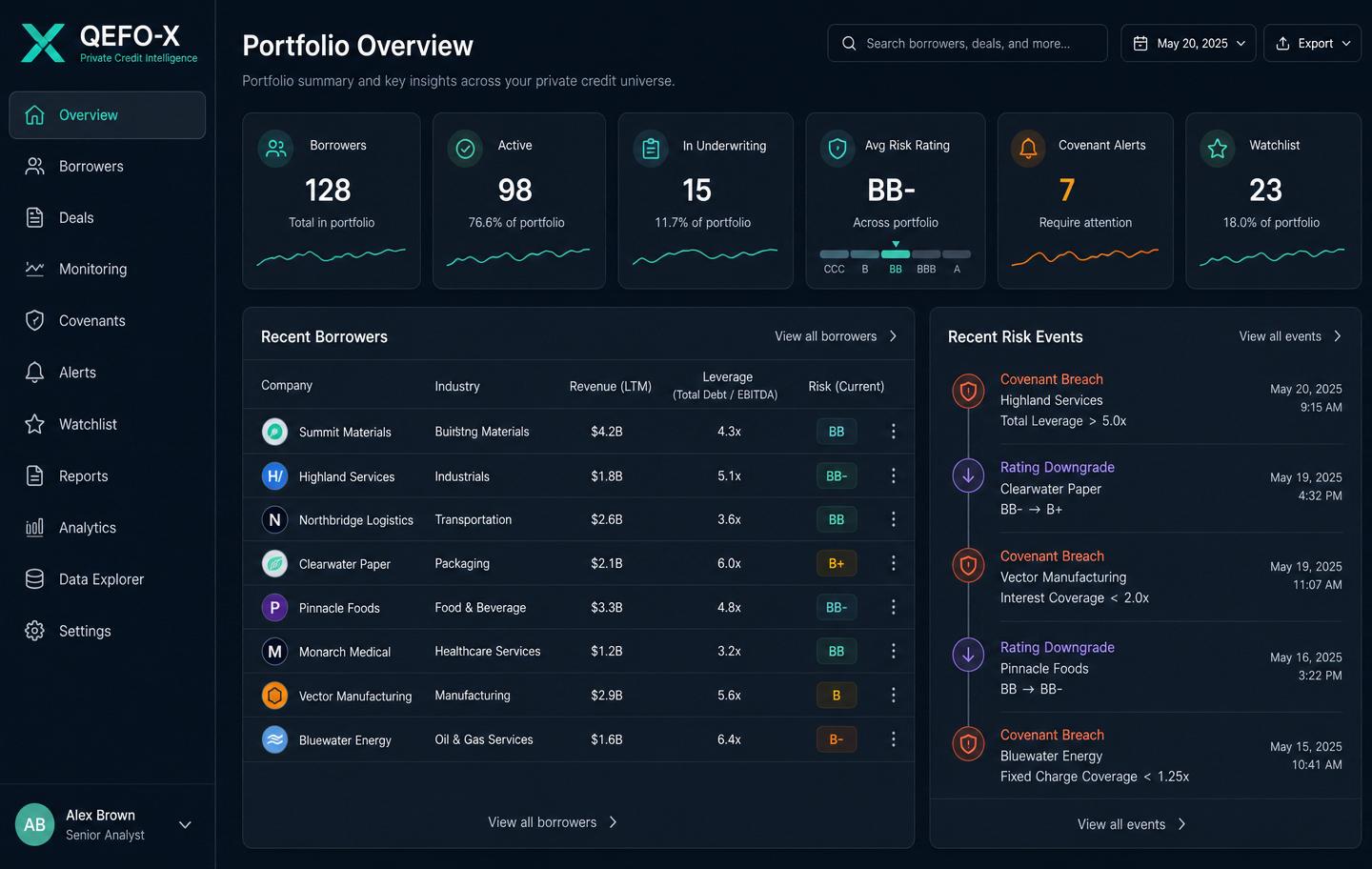
A credit workstation, not a dashboard
Six connected surfaces the deal team uses daily. Every screen shown with simulated data.
One workstation view of the whole book
Exposure, watchlist, covenant alerts, average risk score, and reviews due — with a risk-versus-exposure matrix that shows where concentration and deterioration overlap.
Open the demo workstationFive signal families, one borrower risk view
Financial statements are one input among five. Atlas combines them into a composite score whose category contributions stay visible, so analysts can see what moved and why.
Financial Signals
Revenue, EBITDA, margin trend, liquidity, leverage, and reporting timeliness.
Operational Signals
Customer concentration, churn, hiring, utilisation, and delivery performance.
Market Signals
Sector pricing, demand shifts, comparable credit spreads, and news sentiment.
Legal / Regulatory
Litigation, permits, licensing, and regulatory exposure relevant to the borrower.
Infrastructure Risk
Power cost, capacity, uptime, and supply dependencies for asset-heavy borrowers.
AI Infrastructure Credit Intelligence
Lending against data centers, GPU capacity, and power-intensive infrastructure creates risks that financial statements lag badly. Atlas is designed to track them as operating signals.
- Power and energy costRegional power pricing and hedging coverage against contracted margin.
- Capacity utilisationBooked versus deployed capacity and the trajectory of realised utilisation.
- Customer concentrationContract renewal timing and revenue share held by the largest counterparties.
- Operational resilienceUptime, cooling and supply dependencies, and single-site exposure.
- Refinancing riskMaturity walls set against build-out capex and contracted backlog coverage.
Atlas can monitor these signals where a firm connects the underlying data. No live infrastructure or market feed is connected in this demo.
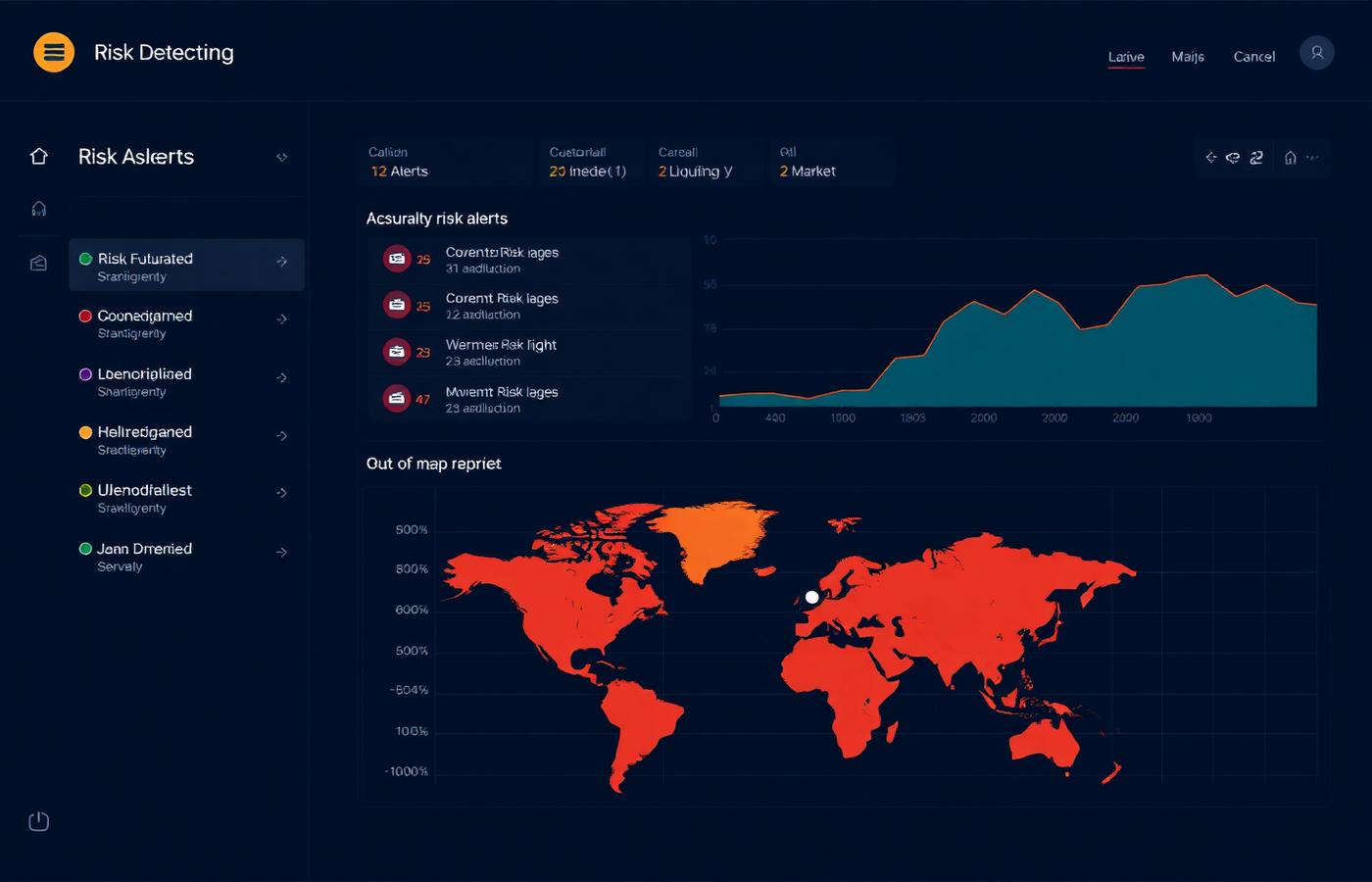
Alerts that name the impact and the next step
Each signal carries severity, the borrower it affects, the estimated credit impact, and a recommended action for the deal team.
- highNorthwind Data Centers
Power cost per MWh up 34% QoQ in the borrower's primary region
Estimated impactEst. 180bps EBITDA margin compression; leverage drifts toward 5.4xRecommended actionRequest updated utilisation and hedging schedule ahead of Q3 test - highCascade GPU Cloud
Top customer represents 41% of contracted revenue after a renewal delay
Estimated impactConcentration breach of internal threshold; refinancing risk elevatedRecommended actionEscalate to IC watchlist and confirm contracted backlog coverage - mediumMeridian Health Services
Monthly management accounts delivered 9 days late for a second month
Estimated impactReporting reliability downgrade; covenant certificate at riskRecommended actionIssue reporting reminder and diarise compliance certificate follow-up - mediumAlloy Precision Industries
Interest coverage headroom fell below 12% on latest test
Estimated impactOne further EBITDA step-down would trigger a covenant breachRecommended actionModel downside case and open amendment discussion early
Demo values. Borrowers, metrics, and impacts above are illustrative and do not represent real companies.
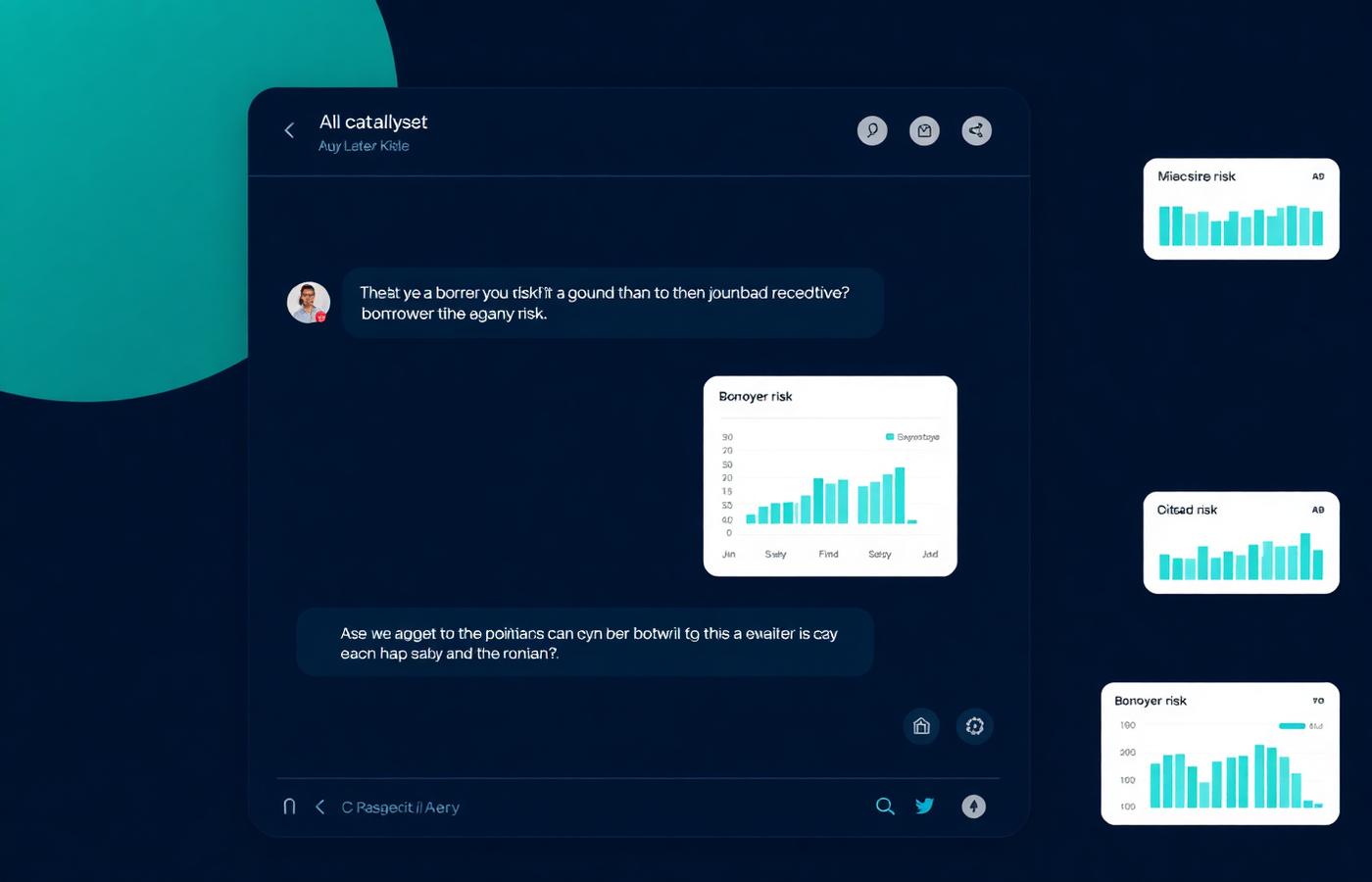
Ask the portfolio a question
The copilot answers with the borrower, covenant, and signal context already loaded — then links back to the underlying records.
- Which borrowers have the highest refinancing risk?
- Show borrowers with leverage above 5x.
- What changed in the last 30 days?
- Generate a credit memo for this borrower.
Private by default
How the platform is built, without claims we cannot evidence.
No public data access
Portfolio tables carry no anonymous read or write access. Every application read runs through server-side functions.
Row-level authorisation
Borrower records are access-scoped per user, and the same rules apply to API and agent access paths.
Scoped agent access
The MCP endpoint is OAuth-protected and read-only; each agent connects as an authenticated user with that user's permissions.
We do not claim any security certification or compliance attestation for this environment.
Common questions
See Atlas against your own portfolio
We'll walk through underwriting, monitoring, and covenant intelligence using scenarios that match your book, then hand over a sandbox.
- 30-minute working session, not a slide deck.
- Signal coverage mapped to your sectors and reporting cadence.
- Sandbox access afterwards to explore the workstation.